P1 · P2 · FBuilt for evaluation and funded accounts
Prop Firm Trading Journal.Your firm's rules, checked after every trade.
Trailing drawdown, daily loss limit, consistency and minimum days, worked out from your closed trades for every evaluation and funded account. Free, with nothing to upgrade.
- Max drawdown
- Static, trailing or EOD
- Daily loss limit
- Checked every day
- Consistency
- Best day vs your cap
- Phases
- Phase 1, Phase 2, Funded
FIG 01Challenge
Know how much room you have before the next session opens.
Set each account's rules once: size, phase, profit target, max drawdown and its type, daily loss limit, consistency cap and minimum days. The Challenge tab does the arithmetic after every closed trade and gives the account one status.
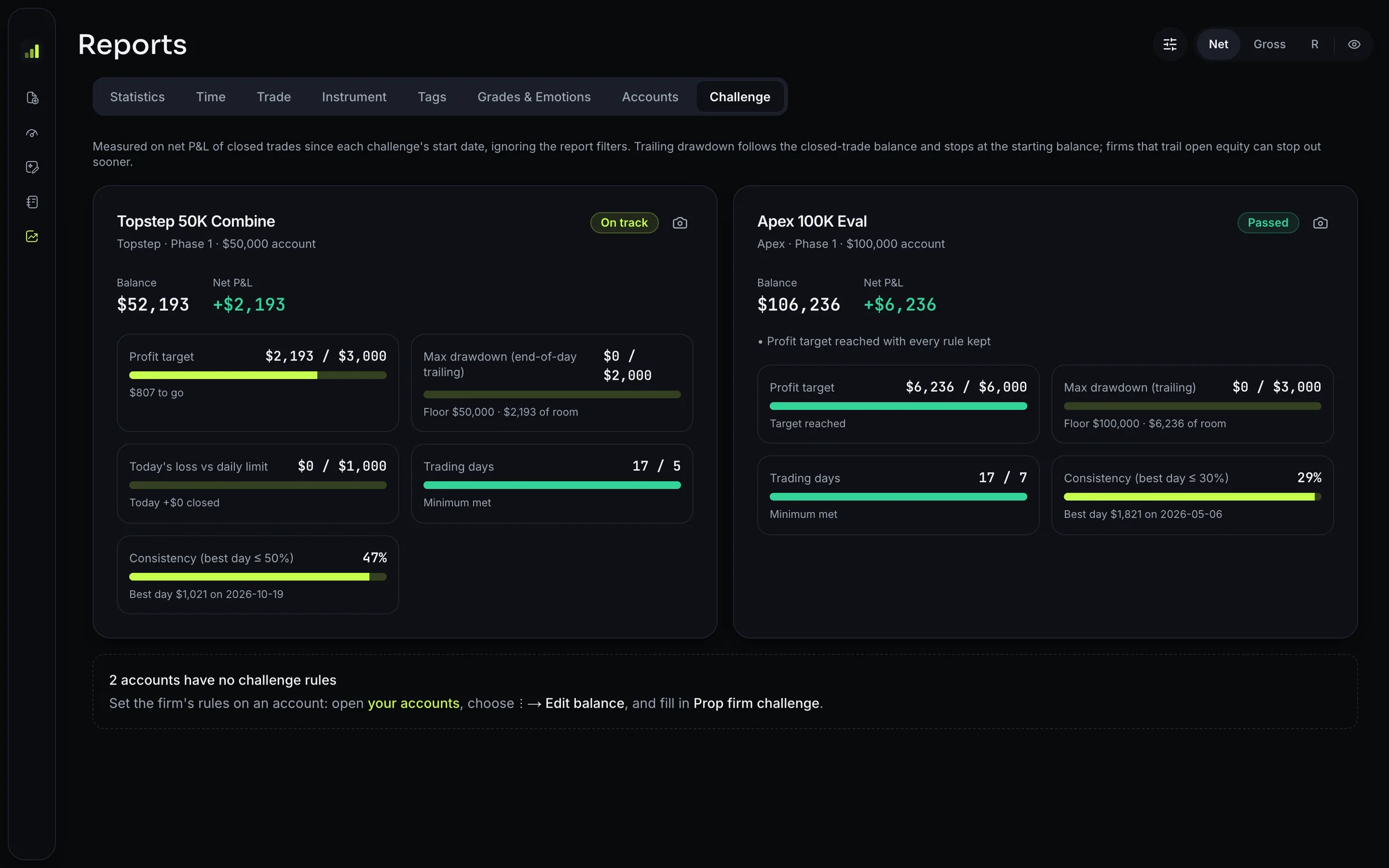
One status per account
- On track
- No rule broken, none close to it.
- At risk
- Under 25% of the drawdown left, today at 75% of the daily limit, best day over the consistency cap, or a losing pace.
- Breached
- The balance reached the drawdown floor, or a day reached the daily loss limit.
- Passed
- Profit target met, minimum days traded and consistency kept.
What it checks
01
Max drawdown, three ways
Static, trailing or end-of-day trailing. The journal walks your closed-trade balance, moves the floor the way your firm does, and shows the room left.
02
Daily loss limit
Your running closed P&L for each day is checked against the limit. Any day that touched it is listed, and today's usage is a live bar.
03
Consistency rule
Your best day as a share of total profit, against the cap you set. Flagged before it blocks a payout or a pass.
04
Minimum trading days
Days traded against days required. Hit the target early and it tells you how many more sessions you still need.
05
Phases
Mark each account Phase 1, Phase 2 or Funded. A funded account is never marked passed; it is tracked for staying alive.
06
Days until breach
After five trading days on a losing average, it estimates how many sessions are left before the floor at that pace.
Worked from closed trades: the journal sees each trade's P&L when it closes, not the open equity in between. A firm that trails intraday open equity can stop an account out earlier than the journal shows.
Trade review
FIG 02Trade replay
Review the setup you took, not the one you remember.
Each trade opens on its candle chart with entry, exit, stop and target marked, beside the numbers that decided it.
- Entry, exit, stop and target on the chart
- Max potential profit and loss for every trade
- A grade and a written review on the trade
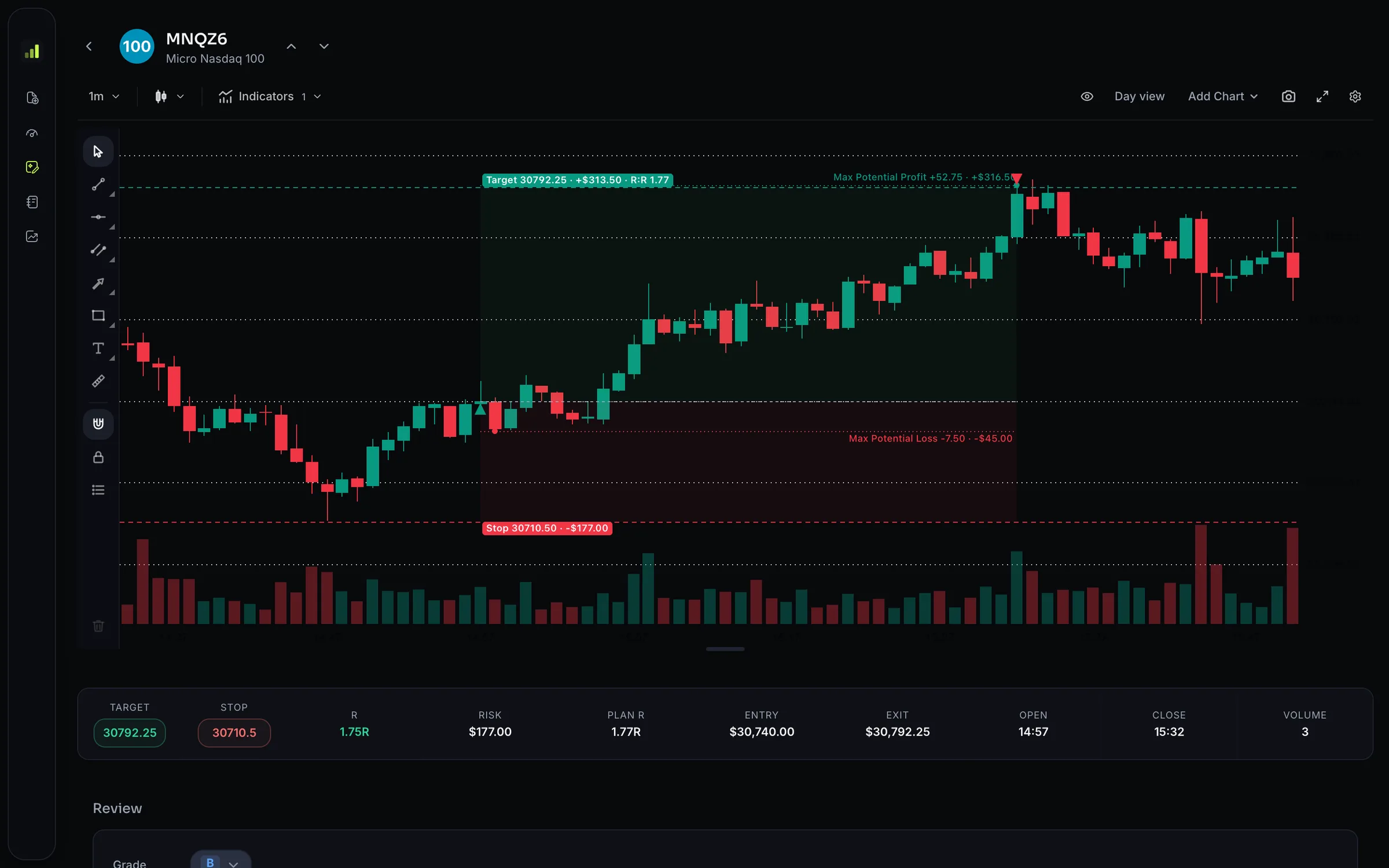
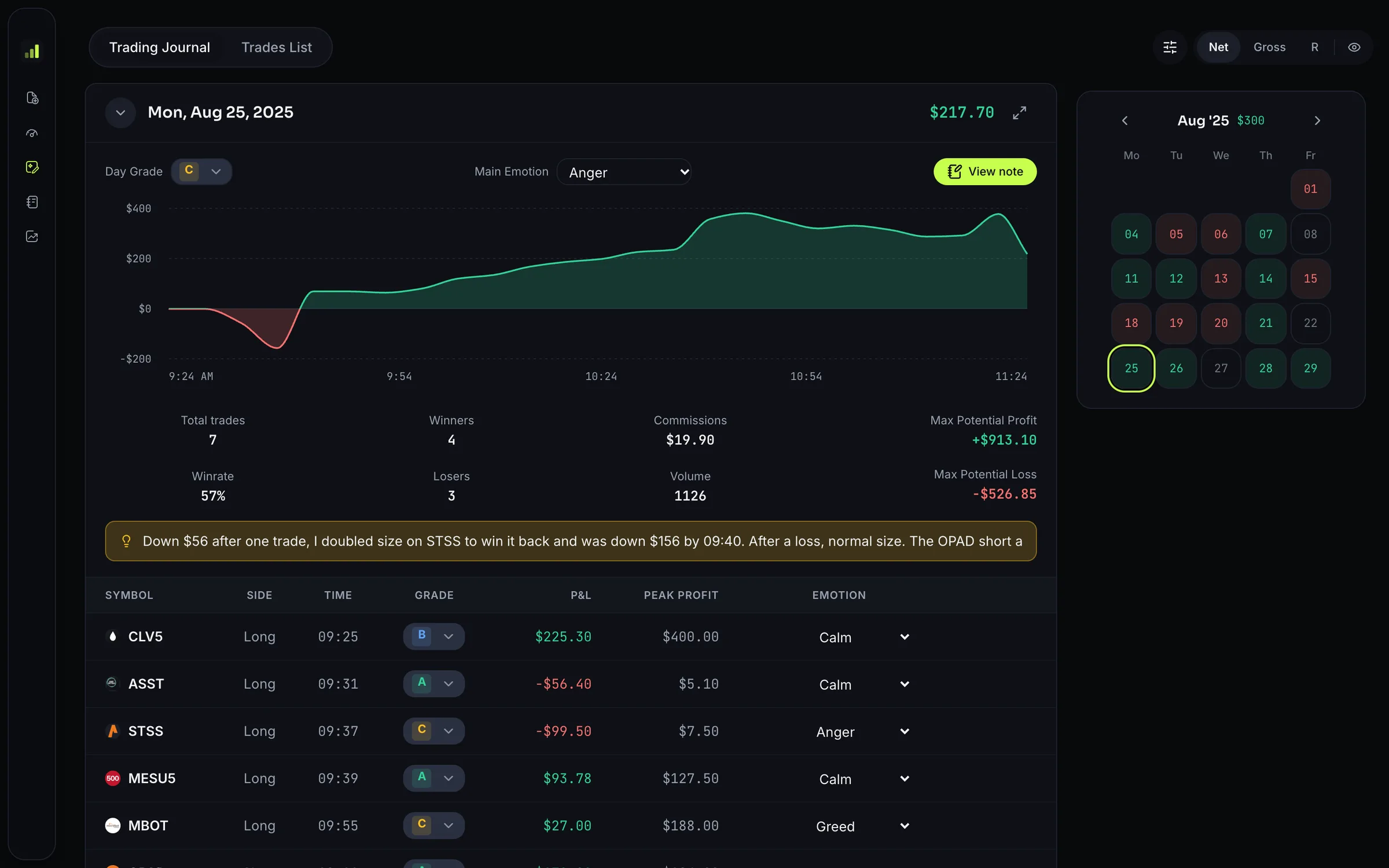
FIG 03Journal
Write the session up while it still stings.
A journal entry for every trading day, tied to the trades it covers, so the lesson from a breached account carries into the next one.
- Daily write-ups beside the day's trades
- Tags for setups and mistakes
- A notebook for what each evaluation taught you
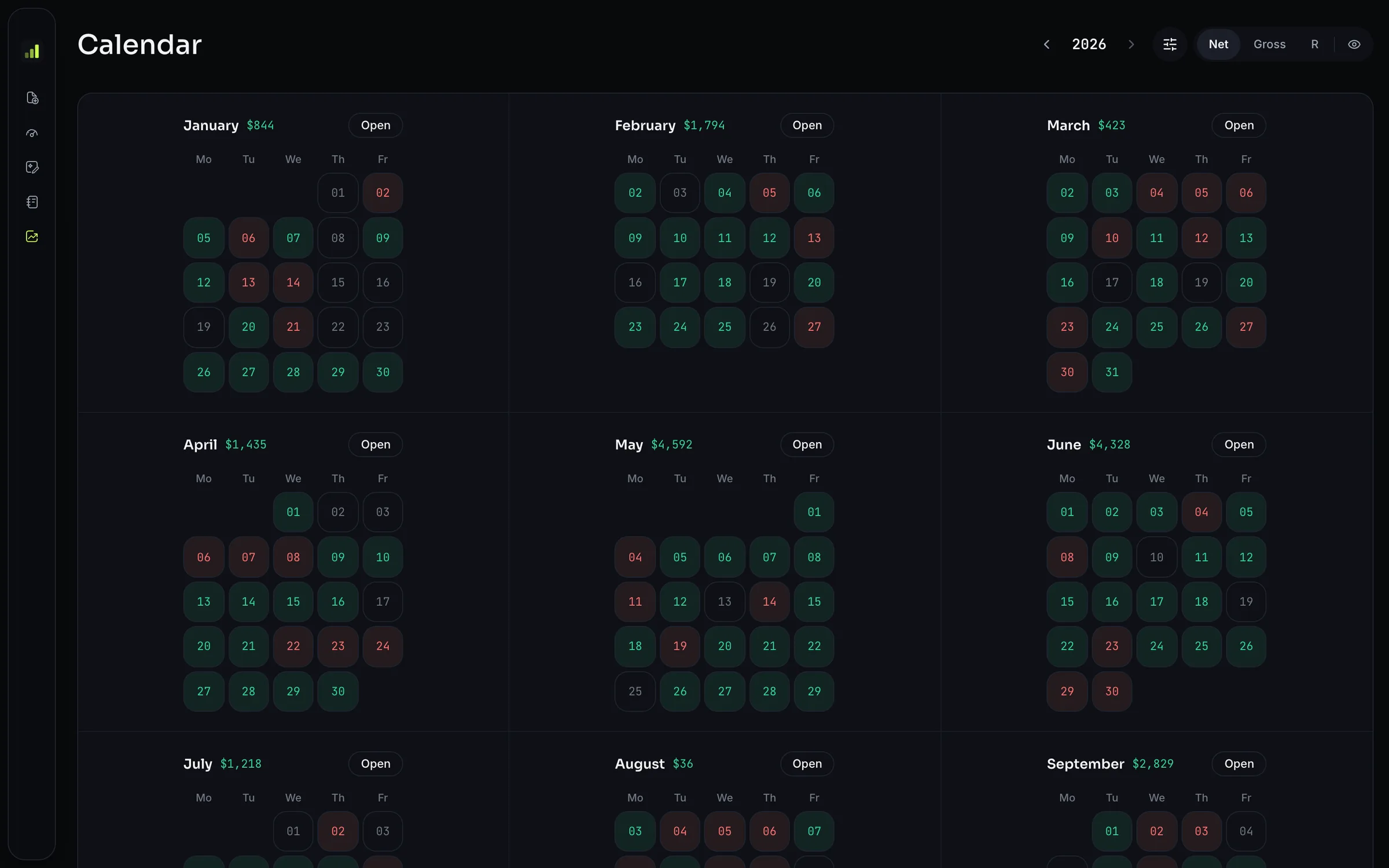
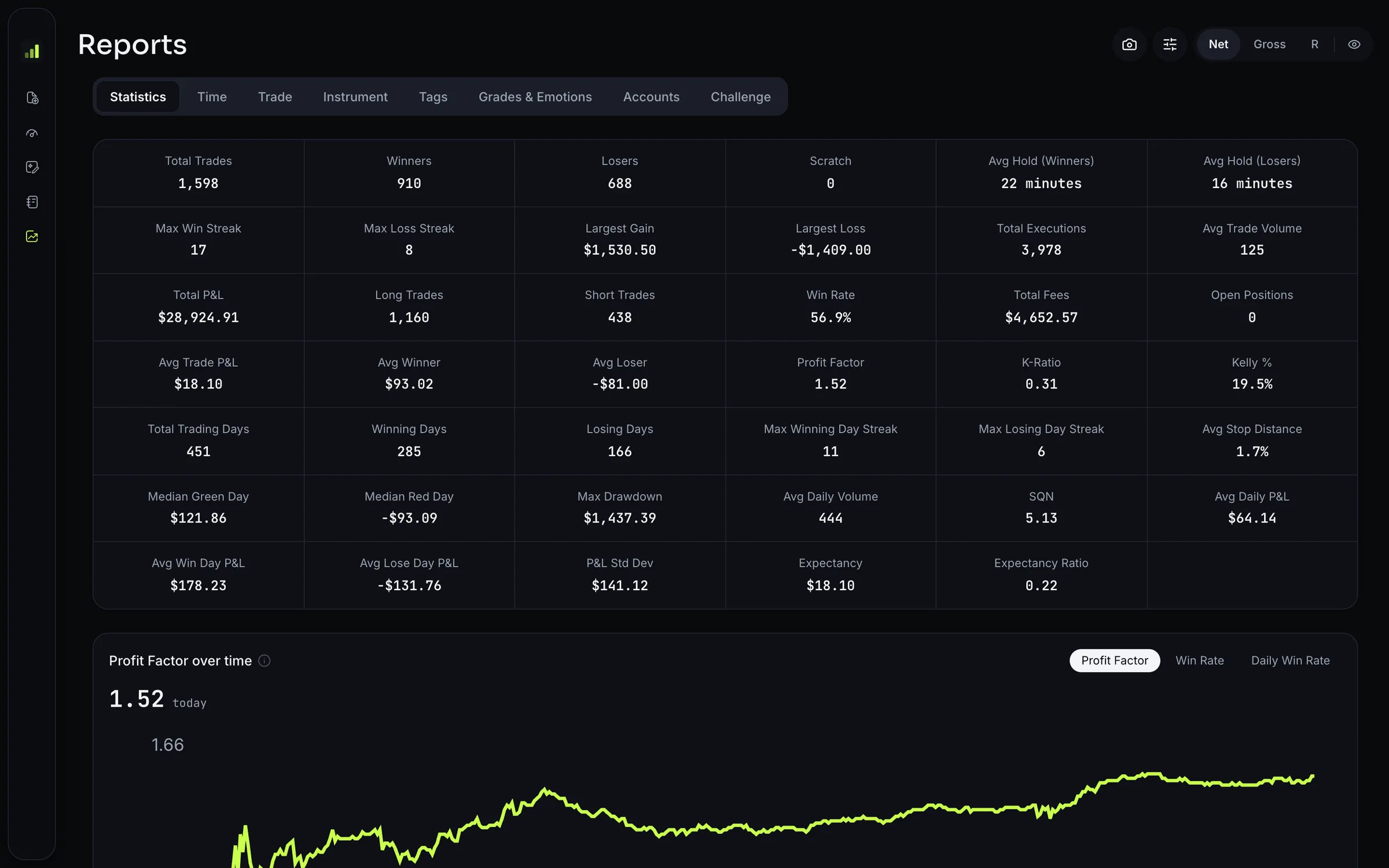
FIG 04Calendar and statistics
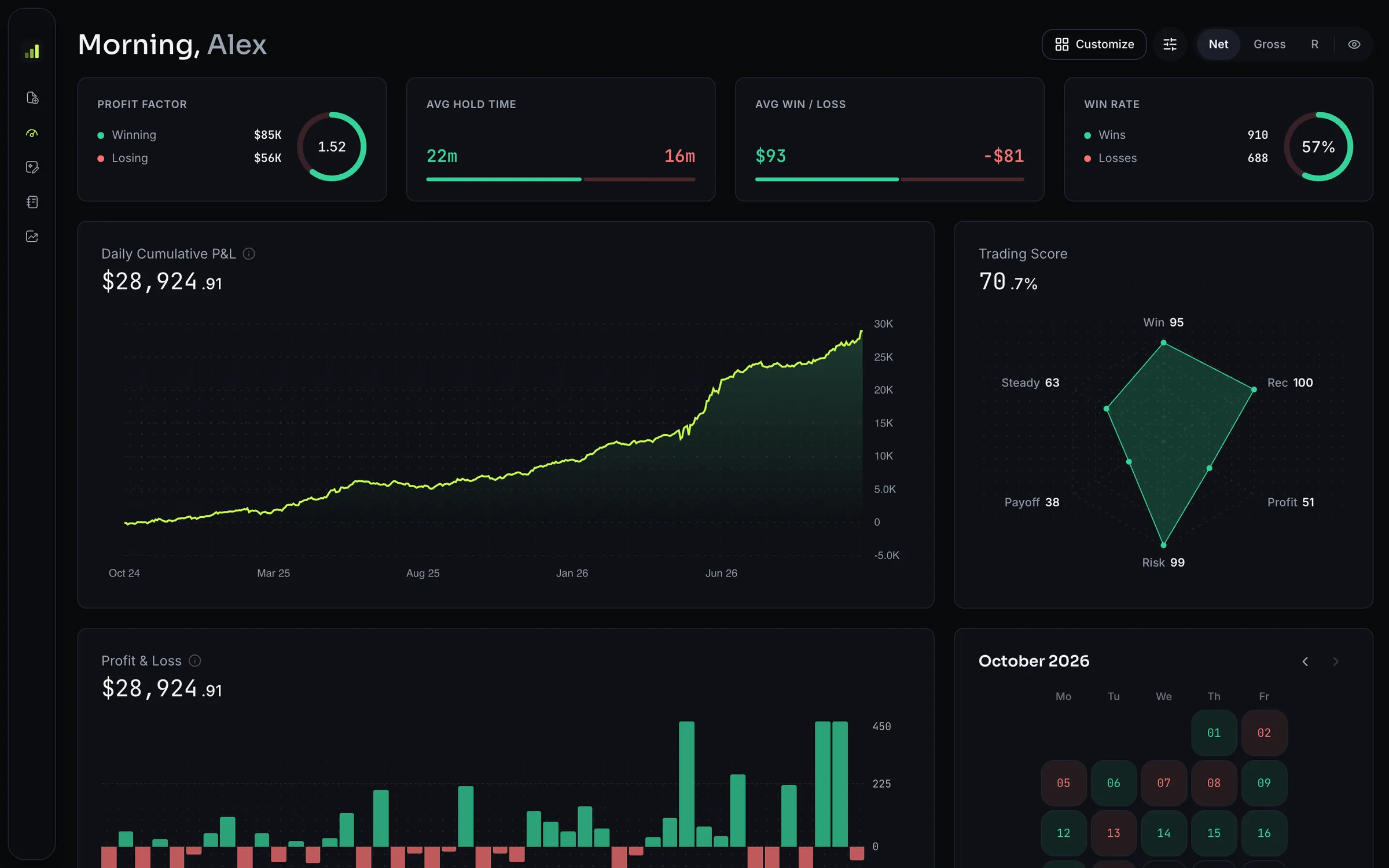
Every session on the calendar. Every number behind it.
See which days paid and which days cost you, then the statistics behind your edge, account by account.
Also in the journal.
Everything a serious journal does, set up for traders running more than one account.
- Imports
- Upload a platform export and every execution lands on the right account, evaluation or funded.
- Reports by account
- P&L by time of day, instrument, tag and account, so a Phase 1 and a funded account are never blended.
- Strategies and rules
- Define your playbook and your daily rules, then tick off what you kept. The checklist is the habit the drawdown rewards.
- Notes
- A notebook beside the journal for what each evaluation taught you, kept with the trades it came from.
- Mentor mode
- Invite a mentor to read your trades and journal, or take on a student and read theirs. Review happens on the same data.
- Price
- Free. No plan, no trial, no card, no upgrade screen. Every feature on this page is included.
Bring the platform your firm runs on.
If your prop firm runs on one of these, its trades import.
Futures
- Tradovate
- Rithmic R Trader
- NinjaTrader
- TopstepX
- Sierra Chart
- Quantower
- MotiveWave
- Tickblaze
- TEFS Evolution
CFD
- MetaTrader 4
- MetaTrader 5
- cTrader
- Match Trader
Charting and reporting
- TradingView
- PropReports
$0
You already pay for the evaluation. The journal is free.
No plan, no trial, no card. The challenge tracker, imports, replay, reports and mentor mode are all included, for every account you add.
Questions prop traders ask first.
Is the Prop Firm Trading Journal really free?
Yes. There is no plan, no trial and no card. The challenge tracker, imports, trade replay, reports and mentor mode are all included. You already pay evaluation fees; your journal should not add another.
Which platforms can I import from?
Futures platforms including Tradovate, Rithmic R Trader, NinjaTrader, TopstepX, Sierra Chart, Quantower, MotiveWave, Tickblaze and TEFS Evolution, and CFD platforms including MetaTrader 4, MetaTrader 5, cTrader and Match Trader. If your prop firm runs on one of these, its trades import. The full list, with export steps for each, is on the supported brokers page.
How is trailing drawdown calculated?
From your closed trades. With trailing drawdown, after every closed trade the floor rises to your highest closed balance minus your drawdown limit, and it never falls. End-of-day trailing works the same way but only takes each day's closing balance, so the floor moves once, overnight. Both stop trailing once the floor reaches your starting balance. Static drawdown is your starting balance minus the limit, fixed. Reaching the floor counts as a breach. Because a journal sees each trade's P&L when it closes, not the open equity in between, a firm that trails intraday open equity can stop an account out earlier than the journal shows.
Do I have to enter my firm's rules myself?
You set the rules per account: account size, phase, profit target, max drawdown and its type, daily loss limit, consistency cap and minimum trading days. Each evaluation and funded account keeps its own, so a Phase 1 and a funded account never share a floor.
What happens to my trading data?
It is used to run your journal and nothing else. We do not sell personal information. Close your account and your information is deleted or anonymized within 90 days, except where the law requires us to keep it. The privacy policy has the details.
Phase 1. Phase 2. Funded.
Set your firm's rules once, import your trades, and see where every account stands before you place the next one.